Is Administrative Bloat Literally the End of Nations?
As good a metric as any


I’ve been thinking about how and why complex societies fall apart. After reading Eli Dourado’s excellent review of The Collapse of Complex Societies, I wanted to give my view on how these collapse theories apply today.

There’s a lot worth reading (in the book and the blog) but my high level take is:
States start as simple governments with simple functions (defense, irrigation, religion)
Gradually, due to man’s base need for warfare, welfare, and idiotic regulation, it takes on more responsibilities or complexity
They can offset the added costs and inefficiencies through resource gains like conquest (old nations) or technology (new ones)
Eventually, this spirals out of control, causing a collapse, most famously seen in Western Rome.
At a high level this seems reasonable enough. Governments tend to increase in size and decrease in efficiency, and enough of this plus some random bad events (like plagues or invasions that they could normally withstand) could logically lead to massive, “There goes the provinces” type issues.
It also has the advantage of being less morality and sensation based than the “Decadence” based theories promoted by thinkers like Ibn Khaldun, who once said
“The first generation of a dynasty preserves the nomadic virtues of desert life: toughness, group feeling, courage, and austerity. The second generation lives in prosperity but still retains some memory of the earlier virtues. The third generation forgets them entirely and lives in luxury and ease. The fourth generation is corrupted, and the dynasty soon falls.”
The decadence theories, in my mind (and Tainter’s, though he makes different arguments) are flawed. You could probably find decadence at any period of any empire, so how can you reasonably find the point of maximum decadence in any objective way? There’s an obvious temptation to point to look at a failed empire, pick the point right before the collapse and say, “Decadence!”.
Of course, you can make the same argument about complexity.
Was the year (or the period) before Rome fell definitively the most complex, or is that just another convenient way to bolster your theory of choice?
The general issue is that you can make a just so story. Fit the theory to the data, say your quantity of choice (complexity, decadence, billyrubins, etc) peaked before the end, and try to publish your book.
The way this would be handled in testable fields is with a study; test the medicine works on patients, test this animal behaves this way in the wild, things of that ilk.
Obviously, we can’t do that with history. In particular, we can’t do that with theories of national collapse. All the great collapses have happened, and while nations fail it tends to be things like the African Coup Belt, where they go through a loop of oppressive dictator → incompetent democracy over and over. This isn’t Tainter’s or Ibn Khaldun’s collapse, since these countries keep existing, just in unstable, shaky ways.
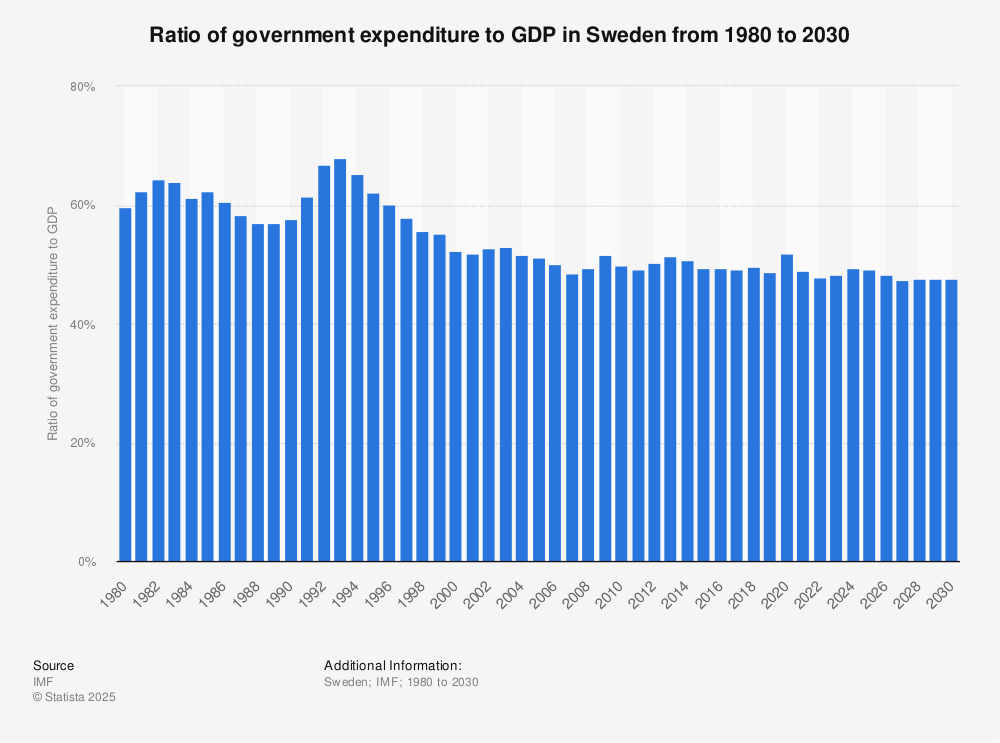
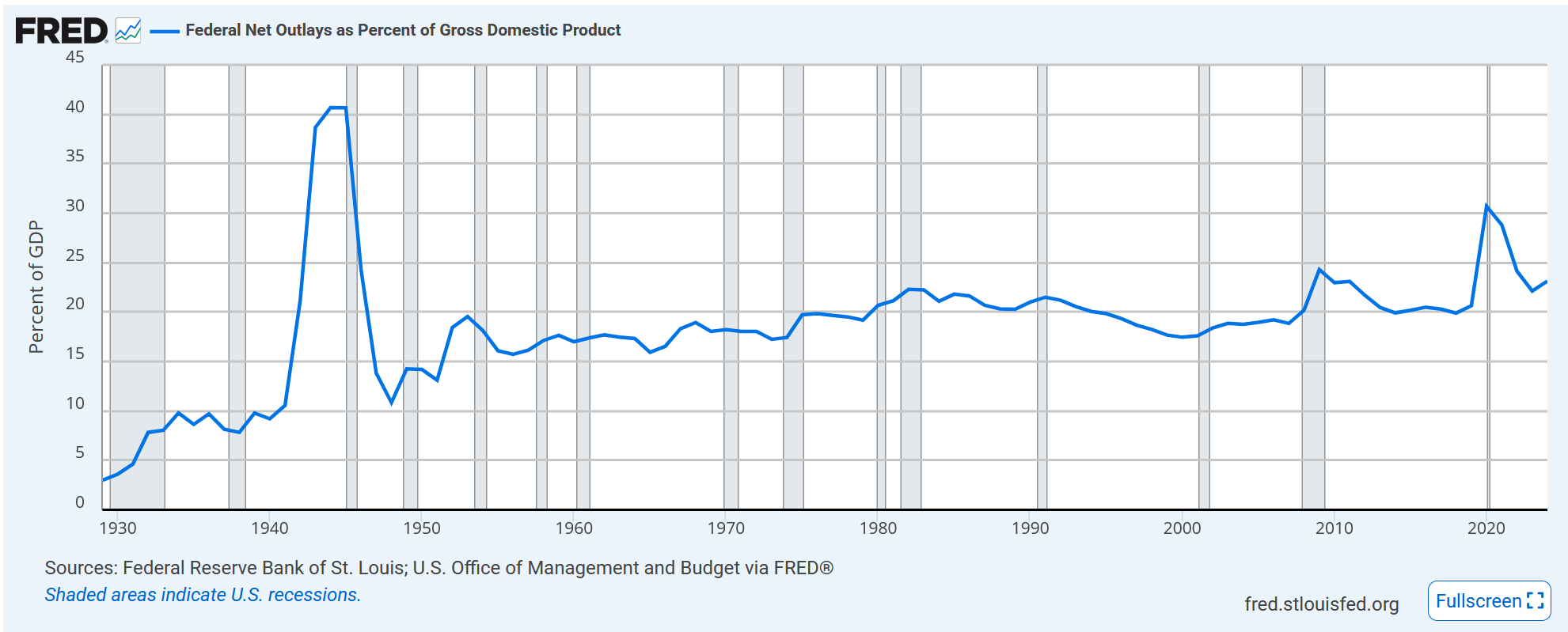
Why care about this? Because I see parallels with the countries of today. There’s a well established issue where most countries spend increasingly more through government, AND a trend where countries today tend to get less and less efficient. The commonly cited reason is that democratic countries are pushed to spend more on welfare, but people are very bad at budgeting (and politicians hate to cut things that people have come to expect) so budgets go up over time.
But this also happens in China, which is much less democratic, so maybe it’s a problem we’re all stuck with.
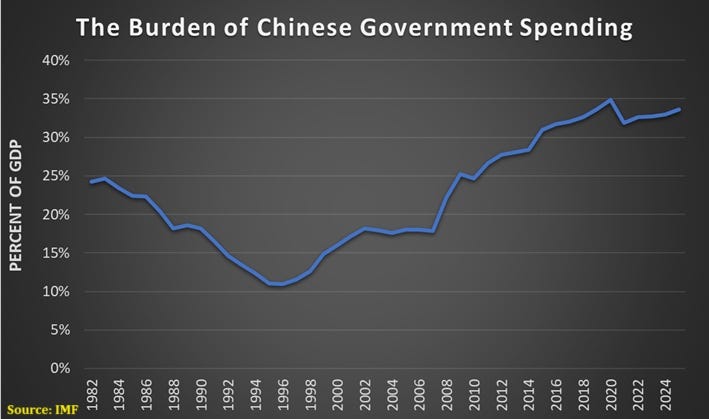
While govt spending as percent of GDP is a decent proxy for “complexity” (in my view) we see other markers of complexity growth today. Currently, the UK is passing draconian censorship laws, and other countries may follow suit. While censorship is not new, one notable thing about these new laws is that (by necessity of the internet) they involve much more process, like webcam and ID checking of visitors to certain sites. More broadly, we see people and officials complain about culture war issues in general (hate speech, tallow in food) which indicates to me that the government is going to increase its grasp and therefore complexity, even as some regulations get cut.
What is the end result? Stagnation of the sort that we see in West Europe, where countries basically stop growing economically. Enough of this could lead to a total regime collapse in places that will radically change the government. An example I think of is the Soviet Union, where there was no invasion or attack, but the nation suddenly changed dramatically.
All of this could be avoided with a major technological shift, and I’m still cautiously optimistic that AI will be the solution. But in many stagnating countries, innovation itself has slowed. This echoes Tyler Cowen’s Great Stagnation thesis: when growth and creativity stall, institutions ossify, problems pile up, and eventually the system breaks under its own weight.
So here’s the bet:
If we don’t get major technological breakthroughs in the next 25 years, parts of the West, especially Western Europe, are headed for regime-level upheaval.
Until then, we’ll likely see more of the same: flat growth, rising government bloat, and deeper gridlock.
Or we could all just be Swedes.